

Total Items
0
0 Item(s)
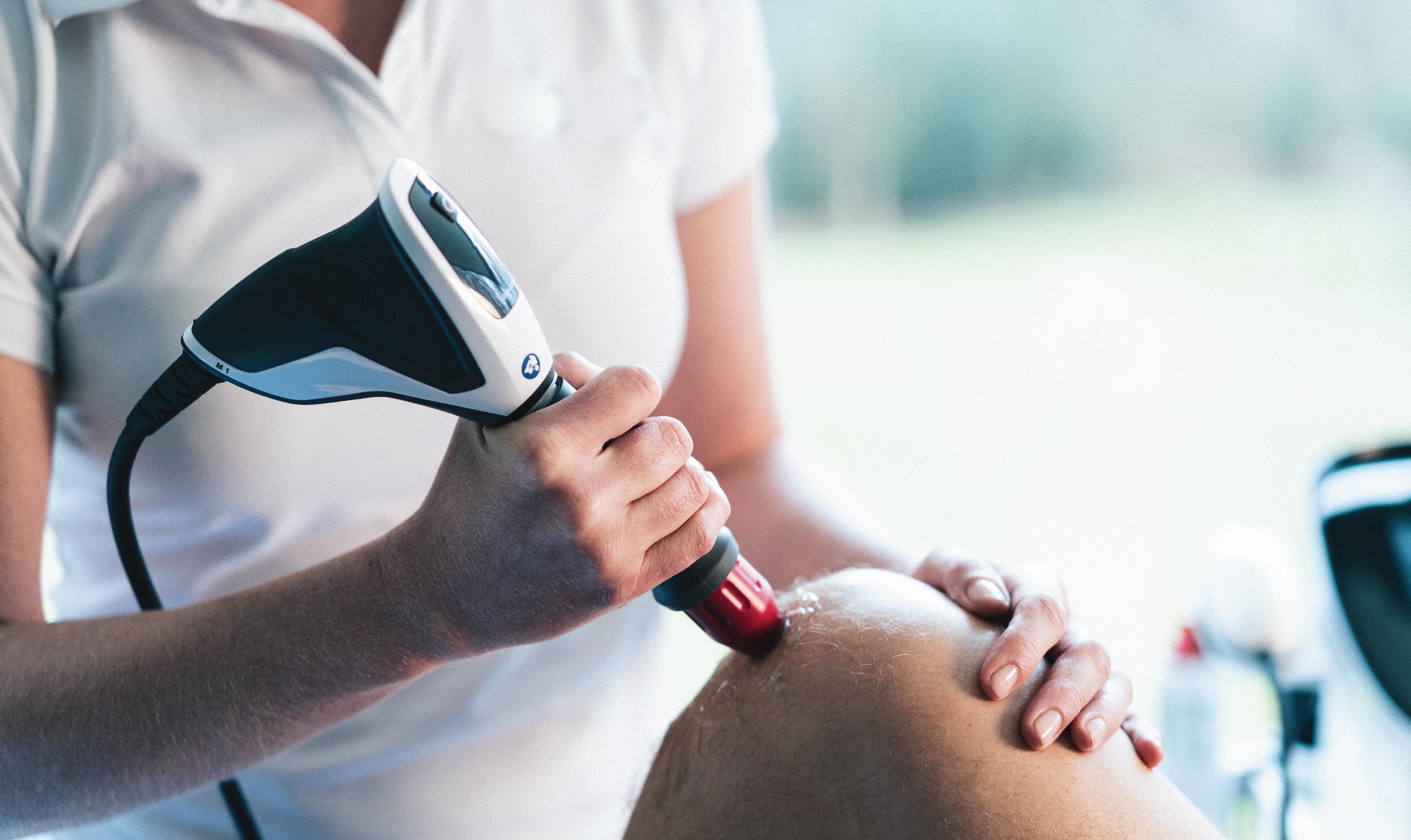
Total knee arthroplasty (TKA) is a common procedure that can significantly improve quality of life for those suffering from severe knee problems. However, the road to recovery can be long and challenging due to stiffness and pain that can persist for months after surgery. Enter radial pressure wave therapy – an innovative treatment that's showing promising results for TKA patients.
Understanding Radial Pressure Wave (RPW) Therapy
RPW therapy is a high acoustic energy treatment that uses mechanical pressure waves to stimulate the body’s natural tissue repair processes. While not a true "shockwave," RPW therapy falls under the same umbrella as shockwave therapy and works through a process called mechanotransduction.
How RPW Works:
Customizing Treatment:
RPW for TKA Patients: A Case Study
David Levine, a physical therapist and researcher, recently shared his experience using RPW therapy on a TKA patient in an Enovis™ webinar.
Patient Profile:
Treatment Results:
Applying RPW to TKA Patients
When using RPW on TKA patients, keep in mind:
Potential Benefits for TKA Patients:
Patient Perspective:
The treated patient reported significant improvements:
Radial pressure wave therapy shows great promise for TKA patients struggling with post-operative stiffness, pain, and limited range of motion. By addressing soft tissue issues and pain, RPW can help patients progress more quickly in their recovery, which may lead to improved function and quality of life as demonstrated in the aforementioned case study. As with any treatment, it's essential to tailor the therapy to each patient's unique needs.
Looking for more information on RPW therapy?
Enovis has several resources to help you learn more about RPW therapy and its many applications in the treatment room. Click any of the links below to access our recommended tools and resources on RPW therapy.
Results from this case study are not predictive of future results.
Individual results may vary. Neither DJO, LLC nor any of the Enovis companies dispense medical advice. The contents of this document do not constitute medical, legal, or any other type of professional advice. Rather, please consult your healthcare professional for information on the courses of treatment, if any, which may be appropriate for you.